Over the past several years, demand for polyetheretherketone (PEEK) has surged as engineers across advanced industries have sought high-performance materials capable of meeting stringent requirements. Aerospace, medical device, and semiconductor manufacturers increasingly specify PEEK for its unparalleled combination of mechanical strength, chemical resistance, and thermal stability.
However, if engineers attempt to machine this remarkable thermoplastic on their own, they may encounter challenges they did not expect. Learn the reasons why machining PEEK is a complicated process, and why it is best to turn to a third party.
Complex Setup and Fixturing Requirements
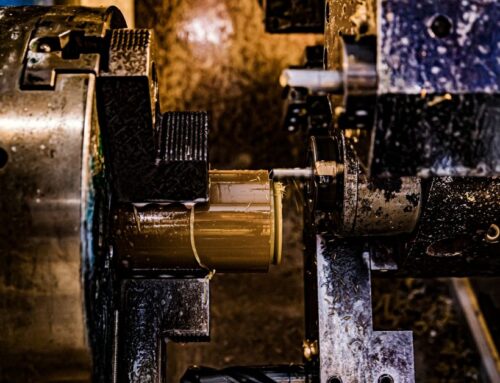
Successfully machining PEEK demands much more than simply loading material into a machine and pressing the start button. Due to its mechanical properties and sensitivity to clamping pressure, PEEK requires carefully engineered fixturing solutions that securely hold the part without inducing deformation. Improper fixturing can result in slippage, vibration, or even subtle warping, especially on intricate or thin-walled components.
Designing the optimal setup requires a deep understanding of the material’s behavior under load and during machining. Specialized soft jaws or custom fixtures may be necessary to protect critical dimensions and finishes. These preparations take expert knowledge and time, making in-house operations risky and complex.
Thermal Sensitivity and Heat Management
PEEK has a high glass transition temperature of approximately 289 degrees Fahrenheit and a melting point of around 649 degrees Fahrenheit, but it remains sensitive to thermal management during machining. Too much heat can cause the material to melt and adhere to the cutting tool. This phenomenon, known as gumming, degrades the tool’s effectiveness and ruins the part’s surface finish.
Furthermore, localized overheating can induce thermal stresses within the material. As these areas cool, the stresses can cause warping, dimensional instability, or even cracking, compromising the integrity of the finished component.
Effective heat management requires sharp tools, optimized cutting parameters, and, often, the use of coolant. However, the choice and application of coolant must also be carefully considered to prevent thermal shock, further complicating the process.

Unique Tooling Requirements
Another reason why machining PEEK is a complicated process is that it requires unique tooling. Standard cutting tools used for metals or other plastics may not be suitable for machining PEEK effectively.
The material’s abrasive nature, especially when filled with glass or carbon fibers, can cause rapid tool wear. Achieving precise cuts and acceptable tool life requires specific tooling. Polycrystalline diamond (PCD) tools can be effective for cutting filled grades of PEEK due to their exceptional hardness and wear resistance.
For unfilled PEEK, sharp carbide tools with specific geometries are necessary. Engineers must optimize the rake and clearance angles to shear the material cleanly rather than plowing through it. A high positive rake angle helps reduce cutting forces and heat generation, while adequate clearance prevents the tool from rubbing against the workpiece. Selecting, preparing, and maintaining the correct tooling is a critical and complex aspect of successfully machining PEEK.
Controlling Burrs and Surface Finish
Achieving a high-quality, burr-free surface finish on PEEK components is another significant challenge. The material’s ductility can lead to heavy burrs at cut edges, particularly when tools become dull. Deburring PEEK is a delicate, time-consuming, and often manual process that adds labor costs and risks damaging the part.
Controlling burr formation at the source requires very sharp cutting tools, appropriate feed rates, and strategic toolpath planning. For instance, techniques such as climb milling can help minimize burr formation.
Achieving a smooth, polished surface finish also demands careful selection of cutting speeds and depths of cut. Any deviation can result in tool marks or a hazy surface, which may be unacceptable for high-precision applications.
Dimensional Stability and Internal Stresses
Like many thermoplastics, PEEK stock shapes contain internal stresses introduced during manufacturing. When engineers remove material during machining, these stresses can cause the part to warp, bow, or distort. This issue is particularly pronounced when machining thin-walled features or parts with significant asymmetrical material removal.
To mitigate this, a multi-stage machining process may be necessary. This might involve rough-machining to its near-final dimensions, followed by a stress-relieving annealing cycle, and then a final finishing pass to achieve the required tolerances. This multi-step approach adds significant time and complexity to the production cycle, requiring specialized equipment like calibrated ovens and a deep understanding of the material’s thermal behavior.

The Impact of Fillers on Machinability
While unfilled PEEK is challenging enough, many applications require filled grades that incorporate materials such as glass fibers, carbon fibers, or graphite to enhance specific properties like stiffness, wear resistance, or conductivity. These fillers make an already difficult material even more complicated to machine. The abrasive nature of glass and carbon fibers dramatically accelerates tool wear, requiring the use of extremely hard, expensive tooling like PCD.
Furthermore, these fillers can lead to a less uniform material structure, which affects the surface finish and can cause chipping at cut edges. The presence of fibers can also influence the direction of burr formation and may require adjustments to cutting parameters to maintain dimensional accuracy. Machining filled PEEK grades demands a specialized skill set and tooling that goes beyond what engineering standard plastics require.
The Need for Specialized Knowledge and Experience
Ultimately, the greatest complication in machining PEEK is the need for specialized expertise. It is not a material that can be successfully machined by simply applying principles used for aluminum or Delrin. A successful outcome depends on a deep, practical understanding of every factor discussed—from material cost and thermal properties to tooling, stress relief, and the nuances of filled grades.
This knowledge is built over years of hands-on experience, involving both successes and costly failures. An experienced PEEK machinist knows how to “read” the material, listen for changes in cutting sound that indicate tool wear, or watch for signs of overheating. This institutional knowledge is invaluable and represents the most significant barrier for any organization considering bringing PEEK machining in-house without the requisite experience.
These challenges show why machining PEEK is far from a straightforward task. It presents a unique set of challenges that demand specialized equipment, tooling, and deep expertise. From managing high material costs and thermal sensitivity to controlling burrs and maintaining tight tolerances, every step requires precision and a profound understanding of the material.
Instead of navigating the complex process of performing PEEK machining yourself, you can trust Plastic Machining Inc. to provide the quality your applications demand. Contact us today to learn how our experienced associates will deliver PEEK components that meet your exact specifications every time.