The aerospace industry operates with the goal of setting new standards in design, performance, and efficiency. Meeting the rigorous demands for lighter, stronger, and more resilient components requires a forward-thinking approach to material science.
Some aerospace engineers have turned to advanced plastics, since they offer superior properties that traditional materials often cannot match. This option has enabled advancements in aircraft design, fuel economy, and operational safety. Read on to learn why advanced plastics are essential to aerospace growth.
Why Aerospace Engineers Should Consider Plastic
For decades, metals such as aluminum and titanium dominated aerospace manufacturing. Although these materials remain critical, advanced plastics offer a compelling suite of advantages that address key industry challenges.
From reducing overall aircraft weight to withstanding extreme operational conditions, engineering-grade plastics provide versatile solutions that enhance performance and lower long-term costs. Review the reasons below to discover why utilizing these materials can help you build the next generation of more efficient and capable aircraft.
Exceptional Durability
A common misconception that people have about plastics is that they lack the durability of metals. However, manufacturers often engineer these materials to perform in some of the most demanding environments imaginable.
For example, these materials exhibit exceptional resistance to wear and fatigue. Additionally, plastics do not rust or corrode, which significantly extends the service life of components and reduces maintenance requirements.
Furthermore, many advanced plastics possess high tensile strength and impact resistance. Their inherent stability across a broad temperature spectrum—from the cold of high altitudes to the heat of engine components—also ensures reliable performance throughout every phase of operation. This remarkable durability makes them a trusted choice for mission-critical applications.
Reduced Fuel Consumption
Engineers often focus on weight in aircraft, as it can significantly impact fuel consumption and operational range. Every kilogram saved translates into significant fuel cost reductions over an aircraft’s lifespan. Replacing heavier metal parts with high-strength plastic alternatives is one of the most effective strategies for reducing the weight of modern aircraft.
Because this weight reduction makes your aircraft more fuel efficient, it will lower carbon emissions and operational expenses. It also enables aircraft to increase payload capacity or extend their range. As the industry faces mounting pressure to improve sustainability and manage fuel price volatility, the strategic implementation of lightweight polymer components becomes an essential part of achieving both economic and environmental goals.

Enhanced Safety
Safety is a non-negotiable aspect of the aerospace industry. Advanced plastics contribute to the safety of aircraft through several key properties.
For example, some are inherently flame-resistant and produce low levels of smoke and toxicity when exposed to fire. Additionally, materials like Ultem® and PEEK self-extinguish, helping contain the fire and giving passengers more time to evacuate in an emergency.
Beyond fire resistance, the electrical insulation properties of plastics are vital. They prevent short circuits and electrical interference in increasingly complex avionic systems, which is crucial for reliable flight control and navigation. The use of plastics for enclosures, connectors, and wire insulation ensures the protection of sensitive electronic components from environmental factors and electrical faults, enhancing overall system reliability and safety.
Precise Components
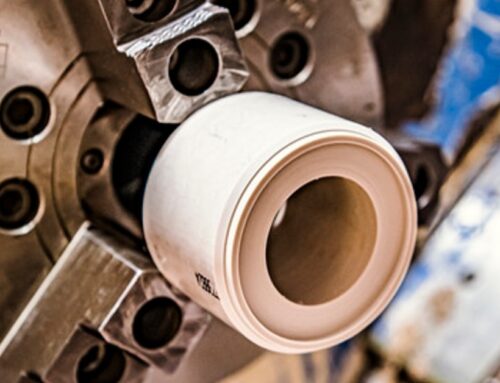
Modern aircraft also demands components manufactured to exceptionally tight tolerances. Advanced plastics are highly machinable, allowing for the creation of intricate and precise parts that meet exact design specifications.
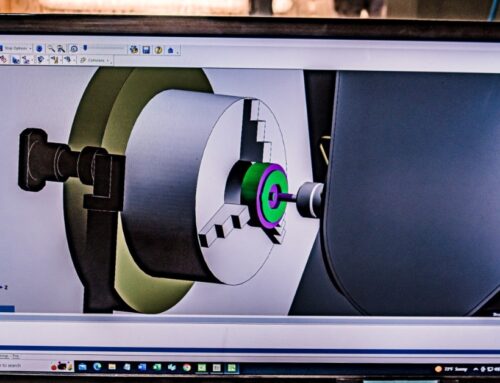
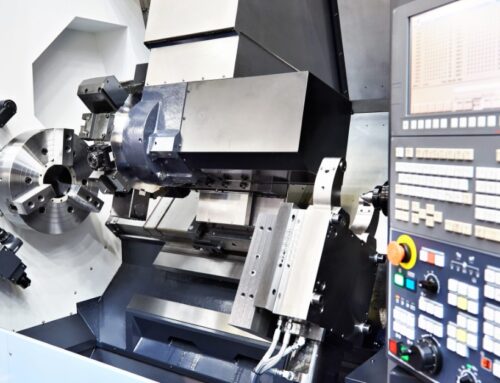
Using state-of-the-art CNC machining, manufacturers can produce components less expensively than if they used traditional metalworking methods. This design freedom enables engineers to optimize parts for performance, weight, and function.
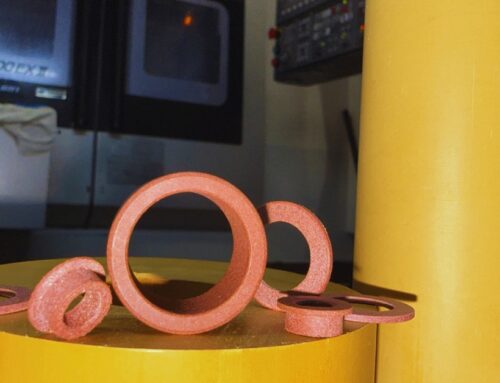
This consistency is crucial for components that must fit and function perfectly within larger assemblies, ranging from seals and gaskets to bearings and bushings. The ability to reliably produce high-precision components makes advanced plastics an indispensable resource for aerospace manufacturing.
Examples of Plastic in Aerospace
After reviewing why advanced plastics are essential to aerospace growth, we can now examine several high-performance materials that have contributed to this sector. Each offers a combination of properties that may make it ideal for your next project.
PEEK
One of the most respected materials in aerospace engineering is PEEK, which offers users excellent mechanical strength and dimensional stability at temperatures of 480 degrees Fahrenheit.
It is also resistant to multiple chemicals, including aggressive aerospace fluids. Its combination of strength, chemical inertness, and heat resistance makes it a prime candidate for high-stress applications, such as seals, bearings, and electrical connectors near engines.

Ultem®
Another high-performance thermoplastic with an excellent balance of properties is Ultem®. It offers exceptional strength, heat resistance, and broad chemical resistance. In addition to being self-extinguishing, Ultem® meets stringent Flame, Smoke, and Toxicity regulations.
This makes it a go-to material for cabin interior components, such as personal service units, trim, and seating parts. Its dielectric strength also makes it ideal for use as an electrical insulator and connector.
Polyimide and Vespel®
Polyimides, particularly the material Vespel®, have earned a reputation for their extraordinary performance at extreme temperatures, maintaining functionality from cryogenic levels up to 550 degrees Fahrenheit and for short durations at even higher temperatures.
They possess very low creep and avoid wear, which is perfect for conditions of high mechanical stress and heat. Engineers often use Vespel® for seals, thrust washers, and bushings in jet engines, control systems, and landing gear, where reliability under pressure is paramount.
PPS
Engineers place a high value on polyphenylene sulfide (PPS) because of its remarkable chemical resistance and dimensional stability. It can withstand prolonged exposure to a wide array of solvents and chemicals, even at elevated temperatures, with no significant degradation.
PPS also provides excellent mechanical strength and stiffness, which it retains over time. These characteristics make it a reliable choice for fuel system components.
Torlon®
One additional material is Torlon®, a thermoplastic with performance capabilities up to 500 degrees Fahrenheit. It excels in severe wear applications, offering superior resistance to friction and abrasion. Engineers frequently use it for high-performance seals and compressor components that must endure significant mechanical loads and high temperatures without failing.
Now you know how advanced plastics can further advance the aerospace industry. Engineers should strongly consider incorporating them into their next aerospace projects.
Contact Plastic Machining Inc. to discuss your specific requirements and discover how our products, including Vespel® plastic sheets, can enhance your work. We can provide you with the high-performance components you need to help your projects take flight.