Every component aerospace engineers design must withstand extreme temperatures, aggressive chemicals, and continuous mechanical stress while reducing overall system weight. Traditional metals meet many of these requirements, but they often add mass, complicate processing, and increase lifecycle costs.
These challenges explain why many engineers now consider high-performance polymers in critical applications. One example of the materials that they have turned to is PEEK. Read on to learn why this thermoplastic is a game-changer in aerospace engineering.
An Exceptional Strength-to-Weight Ratio
Weight reduction drives nearly every aerospace design decision. When engineers remove mass from an aircraft or spacecraft, they improve fuel efficiency, extend range, and increase payload capacity. PEEK plastic material supports those objectives by delivering impressive mechanical strength at a fraction of the weight of aluminum or steel.
Designers rely on PEEK for structural brackets, housings, and wear components because it maintains high tensile and flexural strength without adding unnecessary bulk. Its stiffness allows engineers to maintain tight dimensional tolerances in load-bearing parts. When you combine this strength with a low density, you gain a material that directly contributes to lighter, more efficient systems.
PEEK also resists creep under continuous load, which matters in applications that operate for thousands of hours. Engineers can specify thinner cross-sections without sacrificing structural integrity. That design flexibility often results in more compact, optimized assemblies.
Thermal Stability
Aerospace environments expose components to sustained high temperatures near engines, bleed air systems, and braking assemblies. PEEK withstands continuous service temperatures that exceed those of many other thermoplastics. This thermal endurance allows engineers to replace certain metallic parts without compromising performance.
PEEK retains mechanical strength and stiffness at elevated temperatures, which helps preserve part geometry under thermal stress. Designers can use it in clamps and structural supports located near heat sources. The material’s thermal stability also supports repeated thermal cycling without cracking or warping.
Thermal reliability reduces maintenance frequency and unplanned downtime. When a polymer maintains its properties across a wide temperature range, engineers gain confidence in long-term performance. That confidence proves essential in aerospace programs with strict validation requirements.
Outstanding Chemical Resistance
Another reason why PEEK is a game-changer in aerospace engineering is that it offers exceptional chemical resistance. Aircraft and spacecraft components encounter aggressive chemicals, including hydraulic fluids, fuels, lubricants, and cleaning agents. Materials must withstand these exposures without swelling, degrading, or losing strength.
PEEK resists a broad range of chemicals, which makes it well-suited for fluid-handling and adjacent systems. Engineers often specify PEEK for seals, valve components, pump parts, and electrical connectors that operate near chemical sources. The material maintains dimensional stability even after prolonged exposure to aviation fluids, preventing leakage, misalignment, and premature failure.
Chemical resistance also simplifies maintenance procedures. Technicians can clean PEEK parts using approved solvents without damaging them. That durability supports longer service intervals and more predictable lifecycle costs.

Excellent Wear and Abrasion Resistance
Moving assemblies in aerospace systems generate friction and surface contact under load. Bushings, bearings, thrust washers, and sliding elements must endure repeated motion without excessive wear. PEEK performs exceptionally well in tribological applications, especially when engineers optimize it with fillers for specific wear conditions.
The material resists abrasion and maintains a smooth surface finish during operation. That performance reduces particle generation, which matters in sensitive environments such as avionics or spacecraft interiors. Lower wear rates also extend the lifespan of mating components.
Engineers value predictable wear behavior because it supports accurate maintenance planning. When a component exhibits stable friction characteristics, system performance remains consistent over time. This reliability strengthens the case for polymer-based solutions in dynamic aerospace assemblies.
Dimensional Stability and Low Moisture Absorption
Precise tolerances define aerospace engineering. Even minor dimensional changes can disrupt alignment, sealing, or electrical performance. PEEK exhibits low moisture absorption and excellent dimensional stability, helping preserve part geometry under variable humidity and pressure conditions.
Engineers can machine PEEK components to ultra-tight tolerances for connectors and structural elements. The material resists swelling or distortion in both ground-level humidity and high-altitude environments. That consistency supports predictable fit and function throughout the mission profile.
Dimensional stability also simplifies inspection and traceability processes. When a component maintains its original specifications, engineers can rely on consistent performance data. This reliability aligns well with strict aerospace documentation and quality standards.
Strong Insulation Capabilities
Modern aircraft rely on increasingly complex electrical and electronic systems. Materials must provide strong dielectric properties while surviving heat and mechanical stress. PEEK offers excellent electrical insulation and high thermal stability.
Engineers use PEEK for connector housings, cable management components, and insulation parts located near power-dense systems. The material resists electrical breakdown while maintaining structural integrity. This combination reduces the need for multiple materials within a single assembly.
By consolidating functions into fewer components, engineers can streamline designs and reduce assembly complexity. Fewer parts often translate into lower overall weight and improved system reliability. PEEK supports these integration goals without sacrificing performance.
Compatibility With Advanced Manufacturing
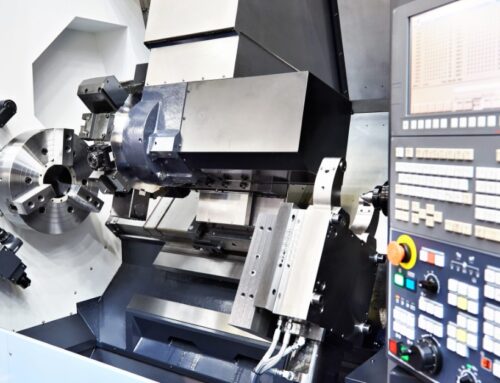
Aerospace programs demand tight tolerances, complex geometries, and full material traceability. PEEK responds well to advanced CNC machining, enabling manufacturers to produce precision-crafted components for critical applications. Engineers can design intricate features without compromising material integrity.
Machinists can hold ultra-tight tolerances in PEEK parts, which supports high-performance assemblies in aerospace systems. The material’s stability during machining reduces internal stresses and post-processing distortion. This predictability enables repeatable production runs and reliable quality control.
PEEK also integrates well into both prototyping and full-scale production workflows. Engineers can validate designs quickly and transition to higher volumes without changing material platforms. That continuity simplifies qualification and certification processes.

Reduced Lifecycle Costs
Aerospace programs place a high value on the total lifecycle costs of parts, not just their initial price. Materials that reduce maintenance frequency, resist wear, and maintain performance under stress contribute to long-term savings. PEEK’s combination of strength, thermal stability, chemical resistance, and fatigue performance supports extended service intervals.
When components last longer, they reduce downtime and maintenance costs. Engineers can also avoid secondary damage caused by premature part failure. These advantages add up across fleets and over multi-decade service lives.
Designing with PEEK often allows for the consolidation of assemblies, reducing part counts and simplifying logistics. Fewer replacement components mean less inventory management and improved operational efficiency. For aerospace engineers focused on reliability and cost control, those benefits matter as much as raw performance metrics.
These reasons show how PEEK has proved its value across aerospace applications and aligned with the industry’s most critical priorities: performance, precision, and long-term reliability. From structurally demanding components to electrically sensitive systems, it supports innovative designs without forcing compromises in weight, durability, or dimensional control.
If you need precision-machined PEEK parts built to exact specifications, contact Plastic Machining Inc. We can provide components that will enable your next aerospace project to move forward with confidence.